


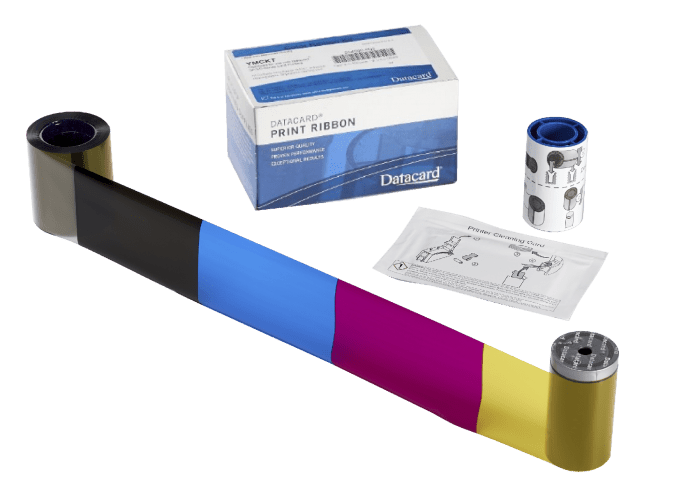
Barcode printing plays an important role in modern businesses. From retail stores and warehouses to healthcare and logistics, clear and durable barcode labels help companies track products and improve operations. However, the quality of a barcode label depends not only on the printer and label material but also on the barcode ribbons used during printing.
Choosing the right ribbon can improve print quality, increase label life, and reduce printing costs. Different industries require different ribbon types based on their environment and application.
At Sigma Labels, we understand that every business has unique labeling needs. We provide high-quality labeling solutions and help customers choose the right products for long-lasting and reliable barcode printing.
What Are Barcode Ribbons?
Barcode ribbons are specially coated films used in thermal transfer printing to produce clear, durable, and long-lasting barcode labels. They work by transferring ink onto a label through heat generated by a thermal transfer printer. The quality of the ribbon directly affects the readability and lifespan of the printed barcode.
Barcode ribbons are commonly used in industries such as retail, manufacturing, logistics, healthcare, and warehousing, where accurate product tracking and identification are essential. They help create labels that can resist scratches, moisture, heat, and chemicals, depending on the ribbon type.
Why Are Barcode Ribbons Important?
Barcode ribbons are used in thermal transf
A good b
- High-qu
ality barcode printing - Better resistance to scratches and smudges
- Protection against chemicals and moisture
- Longer-lasting labels
- Improved scanning accuracy
Without the right ribbon, barcode la
How Barcode Ribbons Work?
Thermal transfer printing uses three main components:
- Thermal transfer printer
- Barcode ribbon
- Label material
During printing, the printer heats the ribbon, melting the ink onto the label surface. The printed image becomes durable and suitable for various environments.
The final print quality depends on matching the ribbon with the correct label material.
Simple Process:
- Ribbon passes through the printer
- Heat melts the ink coating
- Ink transfers onto the label
- A permanent barcode image is created
Types of Barcode Ribbons
There are three major types of barcode ribbons available in the market:
- Wax ribbons
- Wax-resin ribbons
- Resin ribbons
Each type offers different levels of durability and performance.
Wax Barcode Ribbons
Wax ribbons are the most commonly used and economical option. They contain a wax-based ink coating that melts easily during printing.
Best For
- Shipping labels
- Retail tags
- Inventory labels
- General warehouse applications
Advantages
- Cost-effective
- Excellent print quality
- Fast printing speed
- Suitable for paper labels
Limitations
- Lower resistance to scratches
- Not ideal for outdoor use
- Limited protection against chemicals and moisture
If your labels are used for short-term applications, wax ribbons are often the best choice.
Wax-Resin Barcode Ribbons
Wax-resin ribbons combine the benefits of both wax and resin materials. They provide better durability than wax ribbons while remaining cost-effective.
Best For
- Product identification
- Healthcare labels
- Food packaging
- Logistics
- Shelf labels
Advantages
- Better scratch resistance
- Improved chemical resistance
- High print quality
- Suitable for coated paper and synthetic labels
Limitations
- Higher cost than wax ribbons
- Moderate durability compared to pure resin ribbons
- Many businesses choose wax-resin ribbons because they offer a balance between performance and affordability.
Resin Barcode Ribbons
Resin ribbons provide the highest level of durability. They use a resin-based coating that bonds strongly with synthetic label materials.
Best For
- Chemical labels
- Medical equipment
- Outdoor labels
- Automotive parts
- Electronics
- Industrial products
Advantages
- Excellent durability
- High resistance to chemicals
- Water-resistant
- Heat-resistant
- UV-resistant
- Long-lasting print quality
Limitations
- Higher cost
- Requires compatible synthetic labels
Resin ribbons are ideal when labels need to survive harsh conditions.
How to Choose the Right Barcode Ribbon?
Selecting the correct barcode ribbons depends on several factors.
Label Material
Paper labels usually work well with wax ribbons. Synthetic labels often require wax-resin or resin ribbons.
Environmental Conditions
Consider whether labels will face:
- Heat
- Cold
- Moisture
- Chemicals
- Sunlight
- Friction
Harsh environments require stronger ribbons.
Label Lifespan
Ask yourself:
- Will the label last for a few weeks?
- Several months?
- Many years?
Long-term applications often benefit from resin ribbons.
Industry Requirements
Different industries have different needs.
For example:
- Retail: Wax ribbons
- Healthcare: Wax-resin or resin ribbons
- Manufacturing: Wax-resin or resin ribbons
- Chemical Industry: Resin ribbons
Common Applications of Barcode Ribbons
Barcode ribbons are used across many sectors. At Sigma Labels, we help businesses across industries find the right barcode solutions for their specific requirements.
Retail
- Price tags
- Shelf labels
- Product labels
Warehousing
- Inventory tracking
- Shipping labels
- Storage identification
Healthcare
- Patient identification
- Laboratory samples
- Medical equipment
Manufacturing
- Asset tracking
- Component labeling
- Quality control
Food and Beverage
- Packaging labels
- Batch tracking
- Expiry date labels
Logistics
- Parcel labels
- Transport labels
- Tracking stickers
Common Problems Caused by the Wrong Ribbon
Choosing the wrong barcode ribbon can lead to several printing and operational issues. Here are some common problems businesses may face.
Poor Barcode Readability
If the wrong ribbon is used, barcodes may print with low contrast or uneven quality. Scanners may struggle to read the codes, leading to delays in inventory management, shipping, and checkout processes.
Smudging and Scratching
Some ribbons are not designed for certain label materials or environments. As a result, the printed information can easily smear or scratch off during handling, making labels difficult to read.
Fading Over Time
Labels exposed to heat, sunlight, moisture, or chemicals can fade quickly if the ribbon does not provide enough protection. This can lead to lost product information and the need for frequent relabeling.
Poor Adhesion to Label Material
A ribbon that is incompatible with the label surface may not transfer ink properly. This can cause incomplete prints, missing text, or patchy barcodes that fail quality checks.
Increased Printing Costs
Using the wrong ribbon often results in wasted labels, repeated printing, and higher material consumption. These additional costs can add up over time and reduce operational efficiency.
Frequent Printer Maintenance
Incompatible ribbons may leave residue on the printer’s printhead, causing print defects and increasing the need for cleaning and maintenance. This can also shorten the lifespan of the printer.
Product Tracking Errors
Unreadable or damaged barcodes can create mistakes in inventory tracking, shipping, and stock management. These errors may lead to misplaced products and delays in the supply chain.
Reduced Customer Satisfaction
Poor-quality labels can cause shipping mistakes, delayed deliveries, and incorrect product identification. This may affect customer trust and the overall reputation of a business.
Tips for Getting the Best Barcode Printing Results
Follow these simple pra
- Store Ribbons Properly: Keep ribbons in a cool, dry place.
- Match Ribbon with Label Material
: Always check compatibility. - Clean the Printer: Regular cleaning helps prevent print defects.
- Use High-Quality
Supplies: Premium ribbons improve print qualit y and reduce downtime. - Test Before Bulk Printing: Run sample prints to ensure compatibility.
We recommend testing different ribbon options to identify the best solution for your business needs.
Why Quality Barcode Ribbons Matter?
High-quality barcode ribbons
- Better Productivity: Clear labels reduce scanning errors.
- Lower Costs: Durable labels reduce replacement expenses.
- Improved Customer Satisfaction: Accurate trackin
g improves delivery and inventory management. Regulatory Complianc e: Industries like healthcare and fo od require reliable label performance. - Strong Brand Image: Clean and
profess ional labels reflect product quality.
How We Support Businesses at Sigma Labels?
At Sigma Labels, we know that selecting the right barcode printing solution can feel ch
We work
Our approach includes:
- Understanding customer n
eeds - Recommending sui
table ribbon options - Supporting
different industries - Providing dependable labeling solutions
- Focusing on quality and performance
Whether you need barcode labels for retail, l
Future Trends in Barcode Printing
Barcode technology continu
- High-speed thermal transfer printin
g - Durable industrial labels
- Smart inventory management
- RFID integration
- Eco-friendly labeling materials
- Advanced synthetic label solutions
As industries become m
Conclusion
Choosing the right barcode ribbons is essential for producing clear, durable, and reliable barcode labels. Wax
The right choice d
At Sigma Labels, we underst
Frequently Asked Questions
Barcode ribbons are used in therma
The three main types are wax ribbons, w
Wax rib
Resin ribbons are ideal for labels exposed to chemicals, moisture, heat, sunlight, and harsh industrial environments.
Consid
Yes. Po
At Sigma Labels, we focus on prov
