

We have been in the label printing industry since 2010, and in that time we have worked with businesses of every size and across nearly every sector in the UAE. One question comes up more than almost any other when clients are setting up or upgrading their labelling operations: which barcode printer should we be using?
Our answer is almost always the same. If you need reliable, high-quality barcode output at a volume that matters to your business, you want a Zebra barcode printer. Here is why we say that with confidence, and what you need to know before you buy.
What Makes Zebra the Industry Standard for Barcode Printing
Zebra Technologies has been manufacturing barcode and label printers for over five decades, and that longevity reflects something real: their hardware works, consistently, across the demanding environments where barcode printing actually happens. Warehouses, logistics hubs, retail stockrooms, hospital pharmacies, manufacturing floors, and food processing facilities all have different temperature conditions, dust levels, and throughput demands, and Zebra has purpose-built printer families for each of them.
The two core printing technologies in Zebra’s range are direct thermal and thermal transfer, and understanding the difference is the first decision any buyer needs to make.
Direct thermal printing uses heat-sensitive media that darkens when the print head applies heat. There are no ribbons to manage, which keeps consumable costs lower and maintenance simpler. The trade-off is that direct thermal labels are sensitive to heat, light, and abrasion over time, making them best suited for short-lifespan applications like shipping labels, receipts, and temporary warehouse tags where the label does not need to last more than a few months.
Thermal transfer printing passes heat through an ink ribbon onto the label substrate, producing a print that is far more durable and resistant to environmental exposure. For labels that need to survive long-term storage, outdoor conditions, chemical exposure, or extended shelf life requirements, thermal transfer is the correct choice. Most product labels, asset tags, compliance labels, and permanent inventory labels we produce at Sigma Labels are designed to run on thermal transfer printers.
The Zebra Barcode Printer Models We Work With Most
Zebra organizes its printer range into clear tiers based on duty cycle and environment.
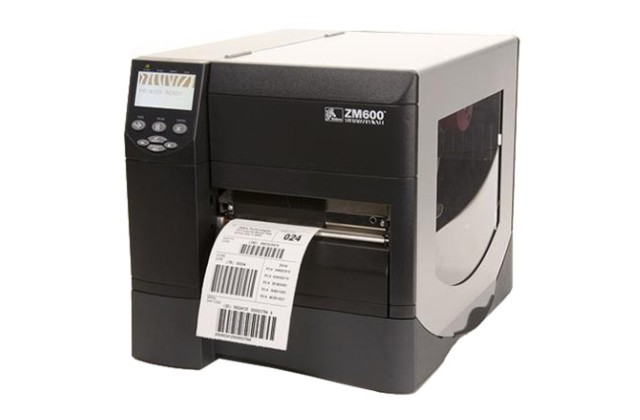
The Zebra ZD series covers desktop label printing for office and light commercial environments. The ZD621 and ZD421 are the current mainstream models in this range, offering fast print speeds of up to 203mm per second, resolutions of 203 or 300 dpi, and a compact footprint that works well in retail counters, pharmacy dispensing areas, and administrative label printing stations.
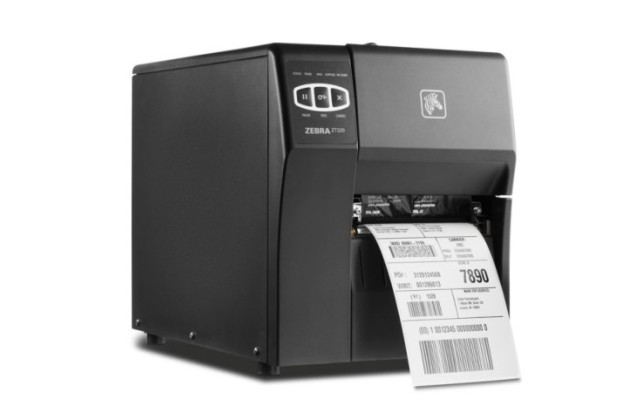
The Zebra ZT series is the industrial range, built for high-volume continuous operation in warehouse and manufacturing environments. The ZT411 and ZT421 offer print speeds up to 356mm per second, robust metal construction, and tool-free media loading that reduces downtime during roll changes. These are the printers we specify for clients running pick-and-pack operations, production line labelling, and any application where the printer needs to run for multiple shifts without intervention.
The Zebra ZQ and ZR series covers mobile printing, which is particularly relevant for field service, retail floor operations, and logistics teams that need to print labels at the point of action rather than from a fixed workstation.
Why Label Quality Matters as Much as the Printer
A Zebra barcode printer will only deliver its full capability when paired with label media that is matched to the print technology and the application environment. This is where our role at Sigma Labels goes beyond simply supplying hardware.
We manufacture and supply label rolls and custom label stock specifically engineered to run on Zebra thermal printers. The core dimensions, liner thickness, adhesive formulation, and face material all need to match the printer’s media specifications to produce barcodes that scan reliably across every reading environment, from handheld scanners in a stockroom to fixed-position scanners on a high-speed conveyor.
A barcode that looks correct to the human eye but fails a scan in a logistics system creates real operational problems. Getting the media specification right from the start is something we guide every client through before they go into production.
Variable Data and High-Volume Barcode Printing
One of the capabilities that Zebra barcode printer systems handle particularly well is variable data printing, where each label in a run carries a unique barcode, serial number, or QR code. Zebra’s ZPL (Zebra Programming Language) is the industry-standard label description language that virtually all warehouse management systems, ERP platforms, and inventory software can output natively. This makes integration straightforward and reliable without custom middleware in most deployment scenarios.
At Sigma Labels, we also offer pre-printed label stock with variable data overprinting, which combines the visual quality of our full-colour printed labels with the on-demand variable data capabilities of a Zebra thermal printer. This is the setup used by many of our clients in food and beverage, pharmaceuticals, and consumer goods who need branded labels with individually unique batch codes or expiry dates.
Talk to Us About Zebra Barcode Printers and Matching Label Stock
Whether you are setting up a new labelling operation or looking to upgrade from an underperforming printer, our team at Sigma Labels can help you select the right Zebra barcode printer model, configure it for your label format, and supply the matched media to keep it running reliably.
Get in touch with us at sigmallc@sigmalabels.com or call us on +971 67482127. We are based in Al Jurf Industrial Area, Ajman, and serve businesses across the UAE with both hardware supply and custom label manufacturing.